

Kyushu: Japan’s Quiet New Frontier for Luxury Wellness Travel
Kyushu, often overlooked due to its distance from the big three – Tokyo, Osaka, and Kyoto – has begun to emerge as Japan’s next compelling wellness destination. For clients seeking an elevated, crowd-free alternative to the Golden Route, Kyushu offers an intersection between authenticity and luxury, featuring the steaming onsen towns of Beppu, the refined elegance of Takachiho, and the velvety richness of Yame’s celebrated green tea. Kyushu offers travellers a taste of traditional hot spring culture while still preserving calm spaciousness and slower rhythms, perfect for discerning wellness clients.
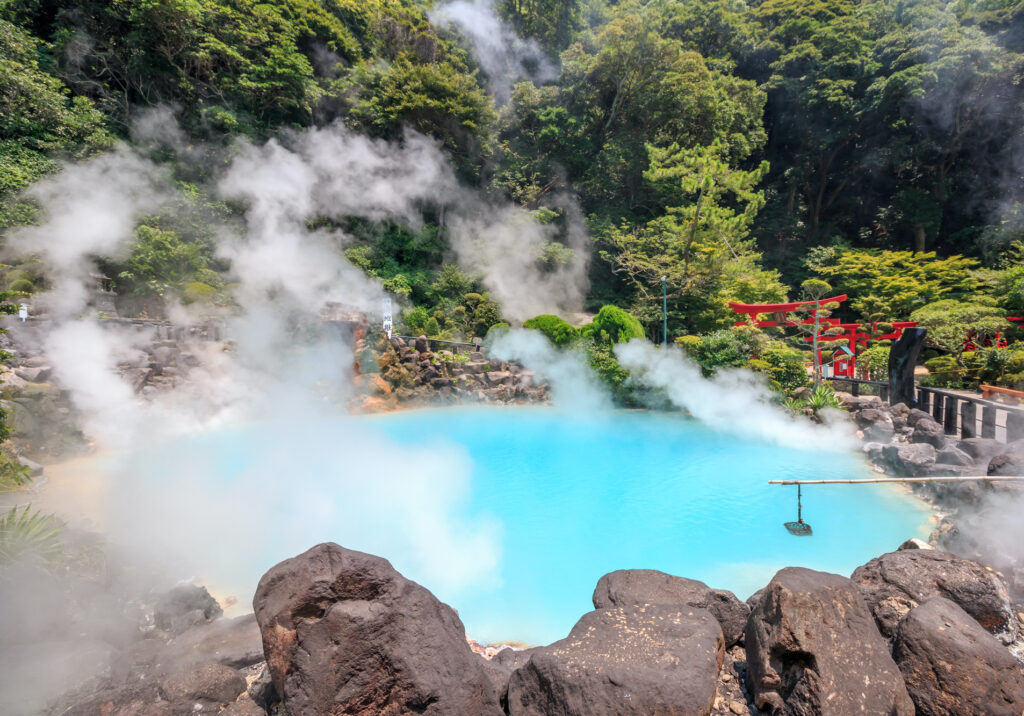
Beppu Onsen
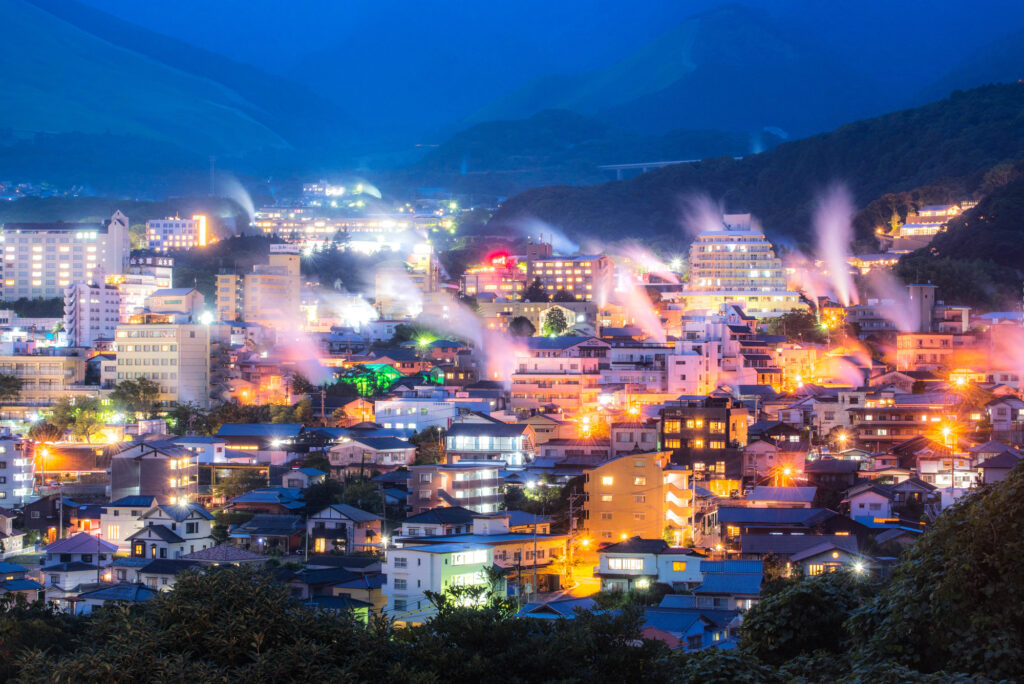
Beppu is one of Japan’s most iconic hot spring towns, easily accessible via Oita Airport with frequent connections from Japan’s major hubs. Beppu is renowned for its density of thermal vents, with eight onsen districts and more than 2,800 hot spring sources. The city offers an unparalleled range of wellness experiences.
For luxury travellers, the standout hot spring is Tanayu at the Suginoi Hotel – a five-tiered terrace bath mimicking the structure of Japanese rice fields and opening out to sweeping views of Oita City. Heritage travellers may enjoy Takegawara Onsen, a centuries-old hot spring just a ten-minute walk from Beppu Station, renowned for its Japanese vintage atmosphere and its celebrated hot sand baths.
Whether clients prefer a soak deep in the mountains or by the oceanside, Beppu offers a wide range of restorative experiences that can be personally tailored to any wellness itinerary. Keep in mind, however, that older hot spring destinations may not accommodate tattooed guests. In these cases, some establishments may offer private hot springs for personal use.
For clients seeking a deep connection with Beppu’s geothermal wonders, there are seven Jigoku hot springs offering a meditative encounter with the raw power of nature. Each hot spring expresses volcanic energy differently: boiling pools filled with steam and vigour, accompanied by rich colours reflective of the pools’ mineral composition. Umi Jigoku evokes the serenity of a tropical ocean with its cobalt-blue waters, while neighbouring pools are enveloped by seasonal water lilies whose fragrance calms the mind. Other Jigoku hot springs feature milky white mineral pools, vivid red iron-rich pools, and bubbling mud baths, all inviting quiet contemplation.
These pools provide a grounding presence for a mindful walk, offering a rich sensory wellness experience. For the most immersive visit, early morning contemplation is recommended.
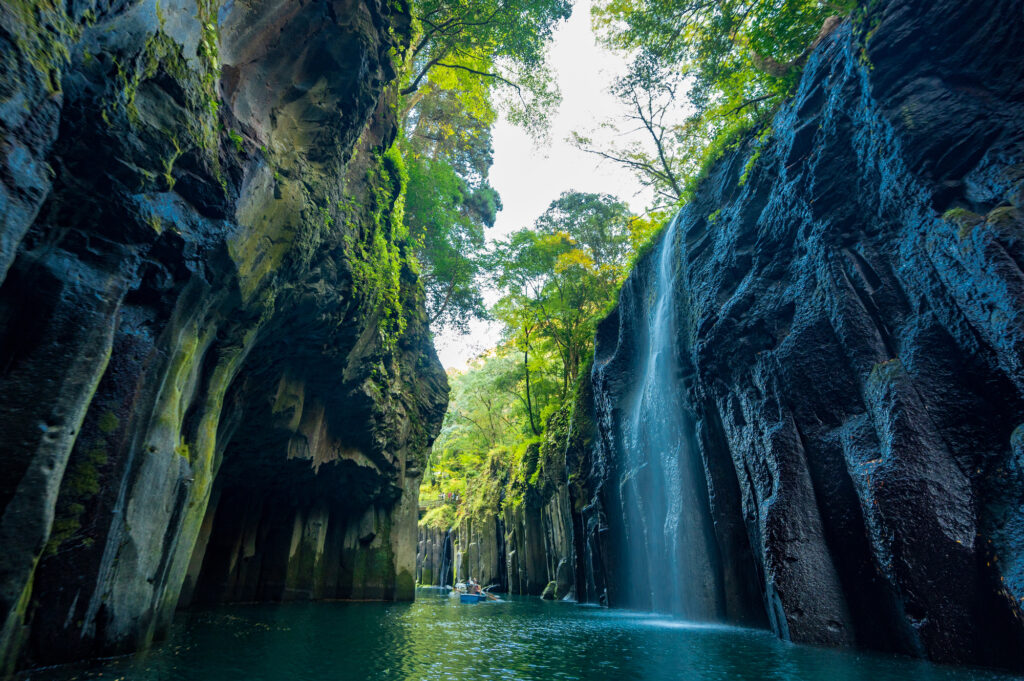
Takachiho
Takachiho, known for its mythical shrines and sensational natural formations, has a strong reputation as a spiritual power spot. It is best accessed via a two-hour drive from Kumamoto City, either by car or, for amenable clients, by direct bus from the airport.
The jewel of Takachiho is its gorge. Formed by volcanic activity characteristic of the region, the gorge opened hundreds of millennia ago and has become an awe-inspiring natural wonder. Clients can walk along the boardwalk overlooking the shimmering waters, admire the canyon’s formations, or take a rowboat to get close to Manai Waterfall, relaxing to the gentle trickling sound of water.
A commonly overlooked spectacle of the gorge is its light. Ancient trees hang over the canyon, allowing only narrow slivers of sunlight to reach the water below, creating an ethereal softness throughout the area. As evening approaches, bamboo lanterns illuminate the pathways with a warm, gentle glow. Together, these natural and crafted light sources create the perfect backdrop to quiet the mind.
Takachiho Shrine and Amano Iwato Shrine are the area’s primary spiritual landmarks. Takachiho Shrine is the centre of the region’s spiritual energy and hosts yokagura – an evening Shinto ritual dance performed nightly in honour of local deities. This offers clients a cultural experience typically reserved for select festivals.
Amano Iwato Shrine is dedicated to the sun goddess Amaterasu Omikami, with the nearby cave directly tied to her mythology. The cave itself cannot be accessed due to religious significance, but it can be observed from the shrine across the river. Visitors may take a reflective walk down to the riverbank, where they can add a stone to the prayer piles formed by other pilgrims. These locations provide opportunities for deep reflection, connection with nature, and appreciation of the spiritual beliefs that have guided personal growth and self-alignment for centuries.
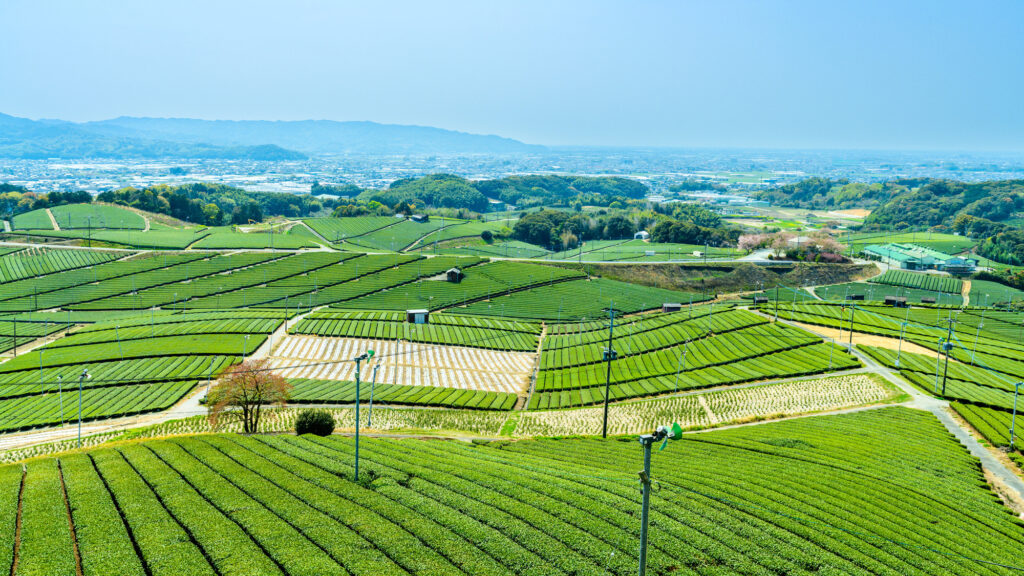
Yame Tea
For travellers interested in Japanese tea traditions that are less known internationally yet deeply refined, Yame tea (Yame-cha) offers a grounding counterpoint to Kyushu’s hot spring culture. Grown in a hidden mist-covered valley known for its mineral-rich soil and centuries of cultivation, Yame tea is prized throughout Japan for its velvety, deep, and naturally sweet flavour.
Travel agents can arrange private tastings at family-run tea estates, where guests can learn about cultivation techniques, savour multiple tea infusions, and engage with artisans who have honed their craft over generations. These slow tea experiences provide a necessary mindful pause within any wellness itinerary, blending elegance with cultural heritage. Through this sensory ritual, travellers are gently guided toward intentional, restorative living.
 Danish
  English
  Arabic
  Bengali
  Bulgarian
  Chinese
  Croatian
  Czech
Czech  Dutch
Dutch  Estonian
  Finnish
  French
  German
  Greek
Greek  Hindi
Hindi  Hungarian
  Icelandic
  Japanese
  Latvian
  Lithuanian
  Polish
  Portuguese
  Romanian
  Russian
  Slovak
  Slovenian
  Spanish
  Swedish