

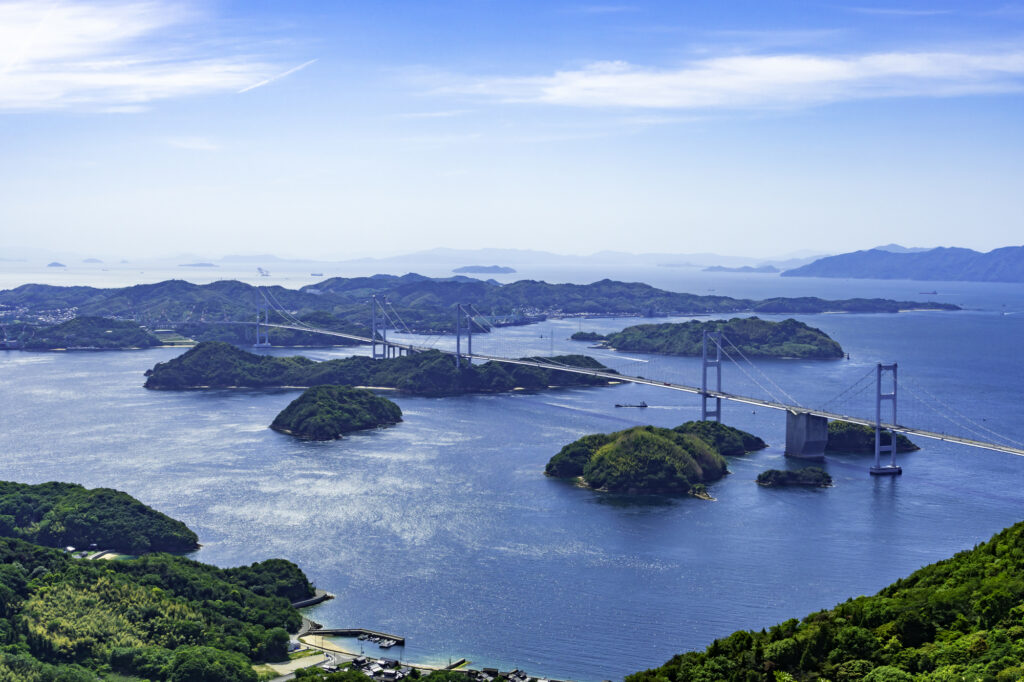
The Shimanami Kaido is one of Japan’s most celebrated cycling routes, linking the western islands in the Seto Inland Sea and connecting the main island of Honshu with the lesser-explored Shikoku with spectacular bridges. Suitable for beginners yet rewarding for experienced riders, the route combines exercise with stunning scenery, making this cycling adventure an ideal destination for travelers seeking an active wellness escape.
Why the Shimanami Kaido
Unlike sightseeing in rural Japan by car or train, cycling encourages travelers to connect and be conscious of their surroundings. The subtle scent of citrus orchards, visiting seaside cafes, and discovering hidden beaches become natural stops rather than a destination to whiz through. Setting the pace allows life to disconnect from time, enjoy the exercise, and appreciate the quiet beauty of the Seto Inland Sea.
Planning the ride
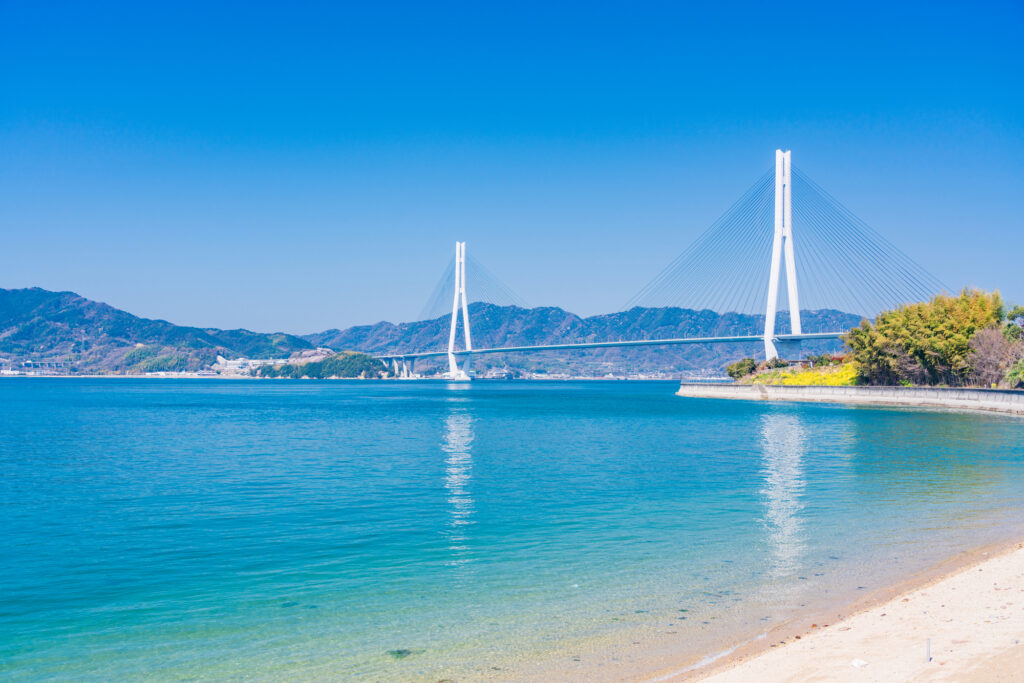
All expansive routes across the Seto Islands, of which the most popular is through six islands, are referred to as the Shimanami Kaido. It is recommended to cycle across two days, with a night stay on either Mishima Island or Ikuchi Island.
The direct route is approximately 70 km. With a blue directional line painted on the road and incredible bike infrastructure, there is substantial reassurance of safety and guidance support. An additional route called the “island explorer” takes the cyclists around the islands to see a new landscape, attractions such as the rose gardens, and the exploration of the history of Japanese pirates. this addition extends the cycle to a total of 80 to 100 km.
For beginners and those cycling primarily for the experience, an e-bike and padded cycling shorts are highly recommended. The clubs between islands can by surprisingly demanding, and an e-bike allows riders to conserve energy for enjoying the scenery. Reserving e-bikes should be done early, as they become unavailable quickly, even during the off-season.

Best Seasons
The off-seasons are winter and summer. Neither is recommended, as the former has short daylight hours–the paths at nightfall are not lit up and can be dangerous–and the latter runs the risk of heat exhaustion. Spring (late March to May) and autumn (September to October) are the best cycling seasons.
Autumn is considered the best season, as the temperatures are comfortable with northern winds cooling down the body. The skies are also crisp and clear, providing spectacular views across the far reaches of the sea.
Spring can be a gamble with a high payoff. Spring in Japan is still cold, and temperatures can fluctuate wildly, with May occasionally reaching summer temperatures. Spring can be worth the travel, as it has seasonal offerings. Late March to early April sakura blooms; late April to May is rose season; and May has incredible lemons and unagi, making local seasonal cuisine another highlight of the journey.

Getting there
For the full course, riders can start from either Onomichi City or Imabari City. Both are accessible from Fukuyama Station. Starting from Onomichi, the ride’s last major landmark is the Kurushima Kaikyo Bridge, the world’s longest suspension bridge. Whereas Imabari finishes with a short ferry ride. Those deciding to start at Onomichi can take a 20-minute local train from Fukuyama, while Imabari is served by a direct highway bus from the Fukuyama station’s bus terminal.
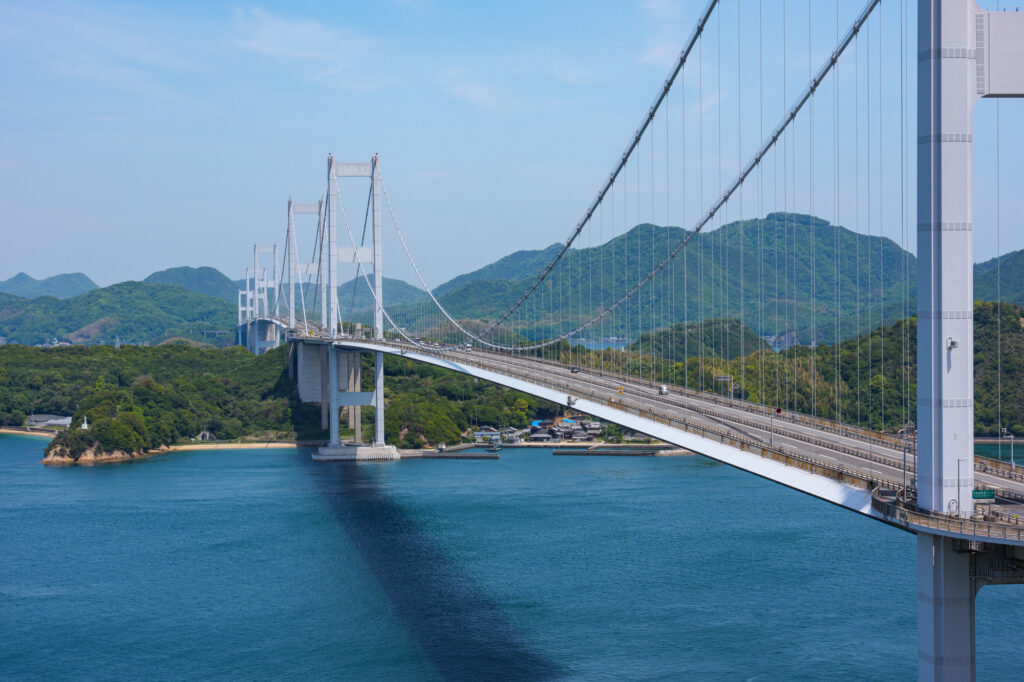
More than just a cycling route, the Shimanami Kaido is an opportunity to travel Japan from a new perspective, one island at a time. Whether completed in a day or over a leisurely weekend, the ocean route offers a memorable way to reconnect with a slower pace in life.
 Bengali
  English
  Arabic
  Bulgarian
  Chinese
  Croatian
  Czech
Czech  Danish
  Dutch
Dutch  Estonian
  Finnish
  French
  German
  Greek
Greek  Hindi
Hindi  Hungarian
  Icelandic
  Japanese
  Latvian
  Lithuanian
  Polish
  Portuguese
  Romanian
  Russian
  Slovak
  Slovenian
  Spanish
  Swedish